
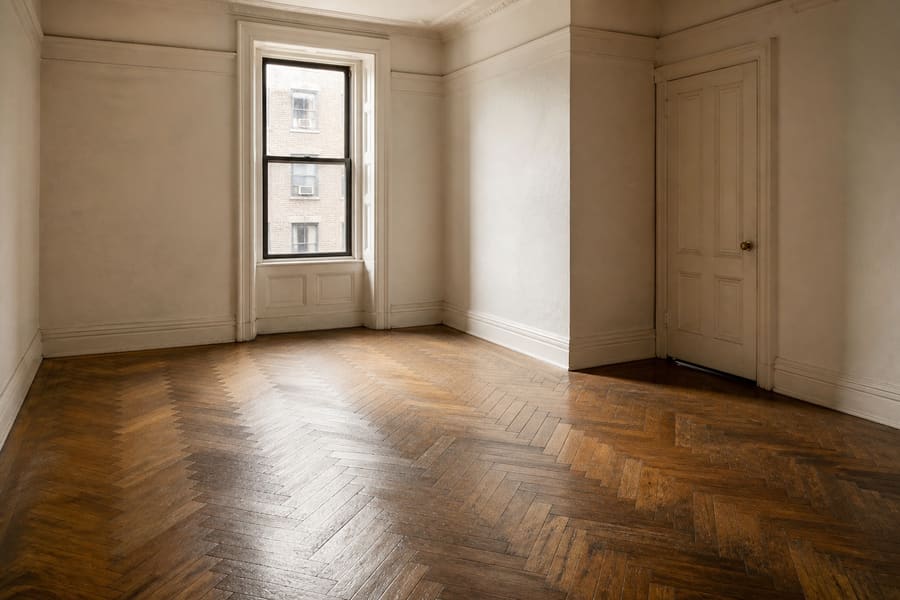
Prewar apartment houses
Old subfloors are rarely flat, so there is usually levelling to do first. If there is an original oak floor underneath, we will tell you if it is worth saving before covering it.
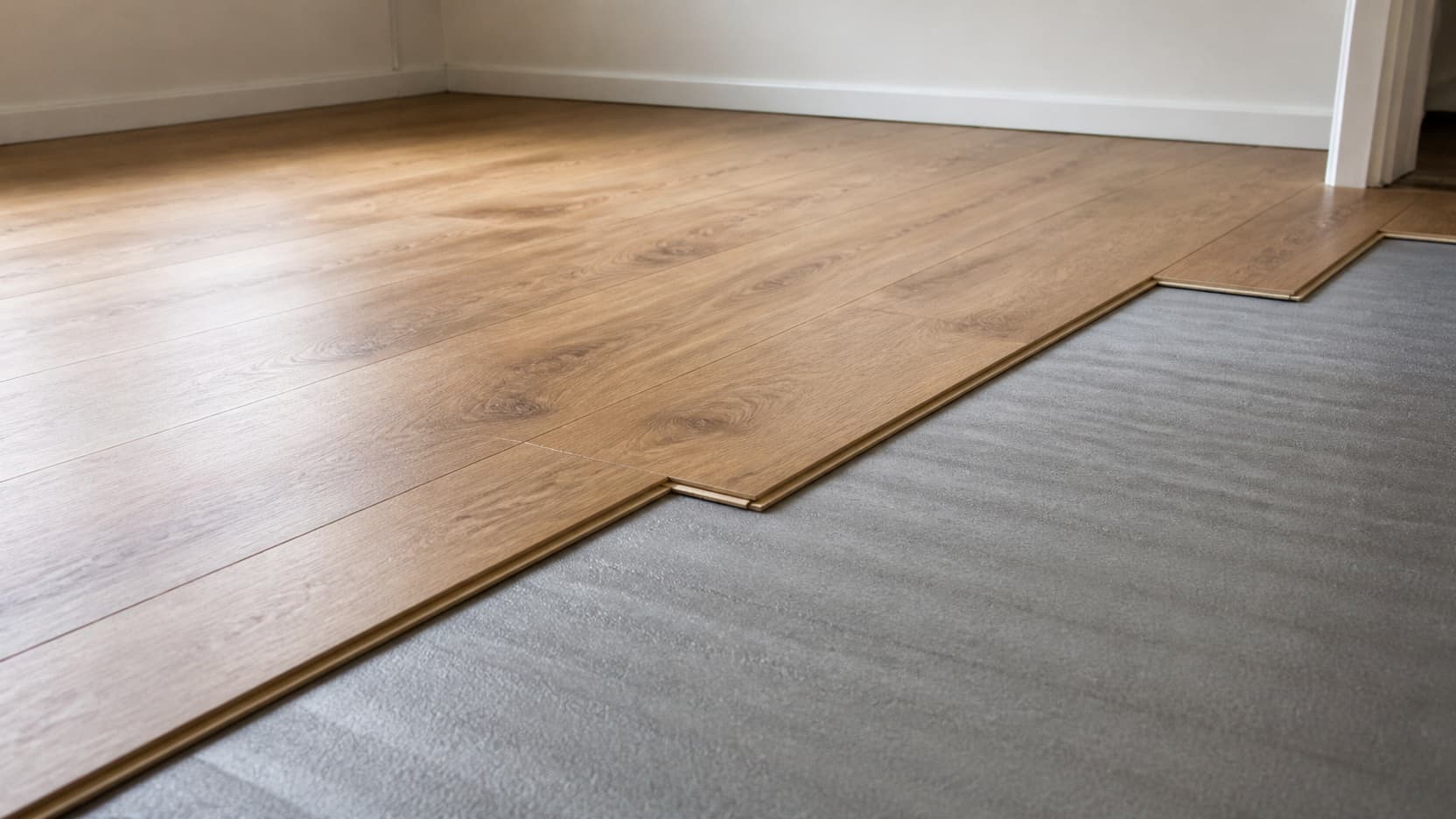
Laminate is a hard wearing floating floor that goes down fast. Two things decide whether it works. What is underneath it, and what your building requires beneath it.
If you remember laminate from twenty years ago you are probably picturing something shiny with a repeating pattern that fooled nobody. Current laminate is a different product.
It is a dense core board with a printed decorative layer and a hard wear layer over the top. The good ones have deep surface texture that follows the grain of the image, so the floor reads as wood underfoot as well as by eye.
It goes down as a floating floor, which means the planks lock to each other rather than being nailed or glued to what is underneath. That is what makes it fast to install, and it is also why the layer beneath it matters so much.
It is a genuinely good floor in the right room and the wrong one in others.
Rentals and turnovers, hallways and living rooms that take heavy traffic, homes with dogs, and any job where the budget has to cover a lot of floor area. The wear layer takes scratching better than a wood finish does.
Bathrooms, laundry rooms and anywhere standing water is likely. The wear layer is water resistant and the core underneath is not, so water that gets into a joint swells the board and there is no fixing it.
Kitchens are the borderline case. A kitchen with a dishwasher and a sink is a room where a leak eventually happens, and vinyl plank is the safer choice there. If you want one floor running through a kitchen and a living area, that usually points at vinyl rather than laminate.
Laminate cannot be sanded or refinished. The decorative layer is a printed surface with a wear coat over it, and once that has worn through there is nothing underneath to bring back.
That is the real trade against wood. A hardwood floor is a thing you maintain across decades, and a laminate floor is a thing you use and eventually replace.
It is not a reason to avoid it. It is a reason to be clear about which one you are buying, and to spend the money on a heavier wear layer if the room is going to be worked hard.
A floating floor gets the same scrutiny as a wood one, and sometimes more.
This is the big one. A floating floor over a hard subfloor can transmit impact sound to the apartment below, and buildings know it. Yours will name an acoustic underlayment or a rating your assembly has to meet.
Replacing a floor is usually an alteration whatever material is going down. Most co-ops want notice and an agreement even when the job is a fast one.
Naming the co-op corporation and the managing agent, on the same terms a wood job would need. The material does not change what your building asks the contractor to carry.
If your building has it, it applies here too. It is about how much hard floor is exposed, not about what the hard floor is made of.
Underlayment plus board has to clear your doors, your appliances and any threshold into an adjoining room. Worth checking before ordering, because it is expensive to discover late.
The city allows weekday work from 7am to 6pm. Laminate is quick, so on a short job the building's own window often decides whether it is one day or two.
Tell us the rooms and the building, and we will tell you whether laminate is the right floor for them.
Call (929) 207-0334What is down now, what is underneath it, how flat it is, and what your building requires. We check heights against doors and appliances at this stage.
Approval and insurance where the building wants them, and a booked elevator slot for delivery and removal.
The boards sit in the apartment before they go down. Laminate moves less than solid wood, and it still needs to settle to the room.
The old floor comes up and the subfloor gets levelled. A floating floor telegraphs every hollow underneath it, so flatness matters more here than people expect.
The acoustic layer your building specifies goes down, taped and lapped as the manufacturer requires so it performs the way the spec assumes.
Boards click together across the room with an expansion gap at every edge. That gap is what stops a floating floor buckling later, and it gets covered by trim rather than filled.
Beading or skirting back on, and thresholds where the floor meets another material.
Old subfloors are rarely flat, so there is usually levelling to do first. If there is an original oak floor underneath, we will tell you if it is worth saving before covering it.
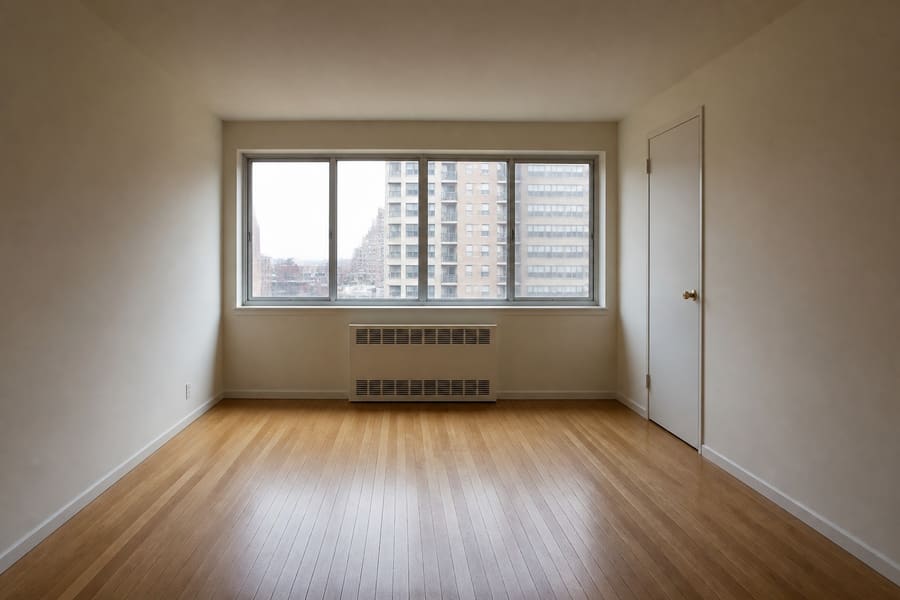
The sound specification is strictest here and a floating floor is exactly what it was written for. Height is tight too, so the underlayment and board have to be chosen together.
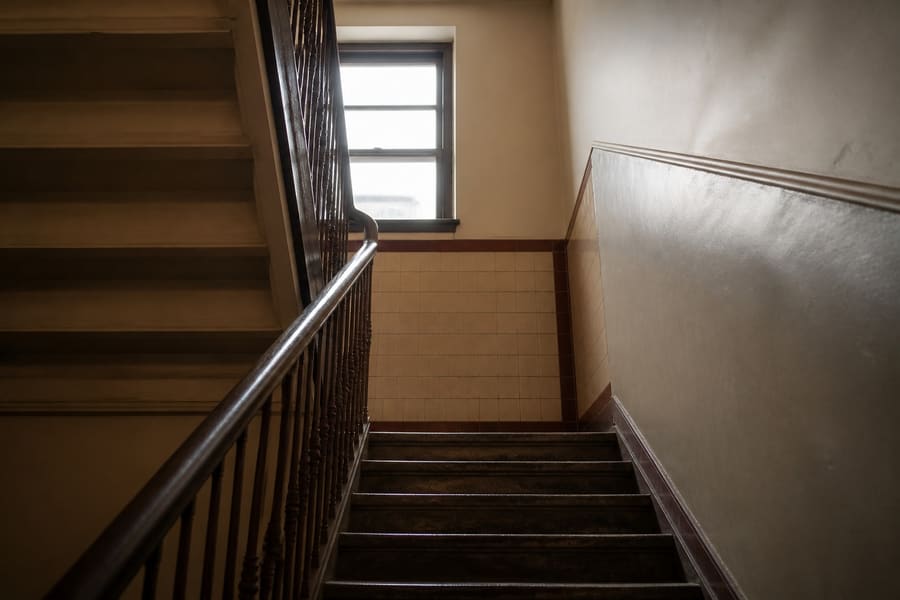
Laminate carries up stairs more easily than most floors, which helps in a walk-up. In a loft the open span shows any unevenness, so preparation is the bigger part of the job.
No. The surface is a printed layer with a wear coat over it, and sanding removes the image itself.
When it wears out the floor gets replaced. That is the main practical difference between laminate and wood, and it is worth factoring in when you compare prices.
It depends almost entirely on the wear layer you buy and the traffic the room takes. A heavy wear layer in a normal apartment lasts many years, and a thin one in a busy hallway with a dog does not.
This is the place to spend rather than save. The labour to lay a cheap board and a good one is the same.
Not a bathroom. Standing water reaches the core through the joints and swollen boards cannot be repaired.
A kitchen is a judgement call and we usually steer people to vinyl plank instead. If you want one continuous floor through a kitchen and living space, vinyl gives you that without the risk.
It can be, and that is the reason buildings care. A floating floor over a hard subfloor with a thin underlayment sounds hollow underfoot and passes impact noise downward.
A proper acoustic underlayment, chosen to meet your building's specification, fixes both. It is not the place to economise in an apartment building.
Yes, more than for a nailed floor. A floating floor bridges hollows instead of following them, so it flexes at the joints and eventually they fail.
We check across the whole area and level what is out before anything goes down.
Concrete gives off moisture and the core of a laminate board does not like it. Where we are going over a slab we deal with that with a moisture barrier as part of the build up.
In a below grade or slab level room where damp is a known issue, vinyl plank is the more forgiving floor.
In most co-ops, yes. Replacing a floor is an alteration regardless of the material, and the sound question makes buildings pay attention to floating floors in particular.
Tell us the rooms and we will tell you whether laminate is right for them.
Call (929) 207-0334Genuinely waterproof, so it handles kitchens, bathrooms and slab level rooms.
A floor that can be sanded and refinished later rather than replaced.
If there is an original wood floor under what is down now, it may be worth bringing back.
Tell us which rooms and what the building is, and we will tell you whether it is the right floor and what your house rules will ask for.